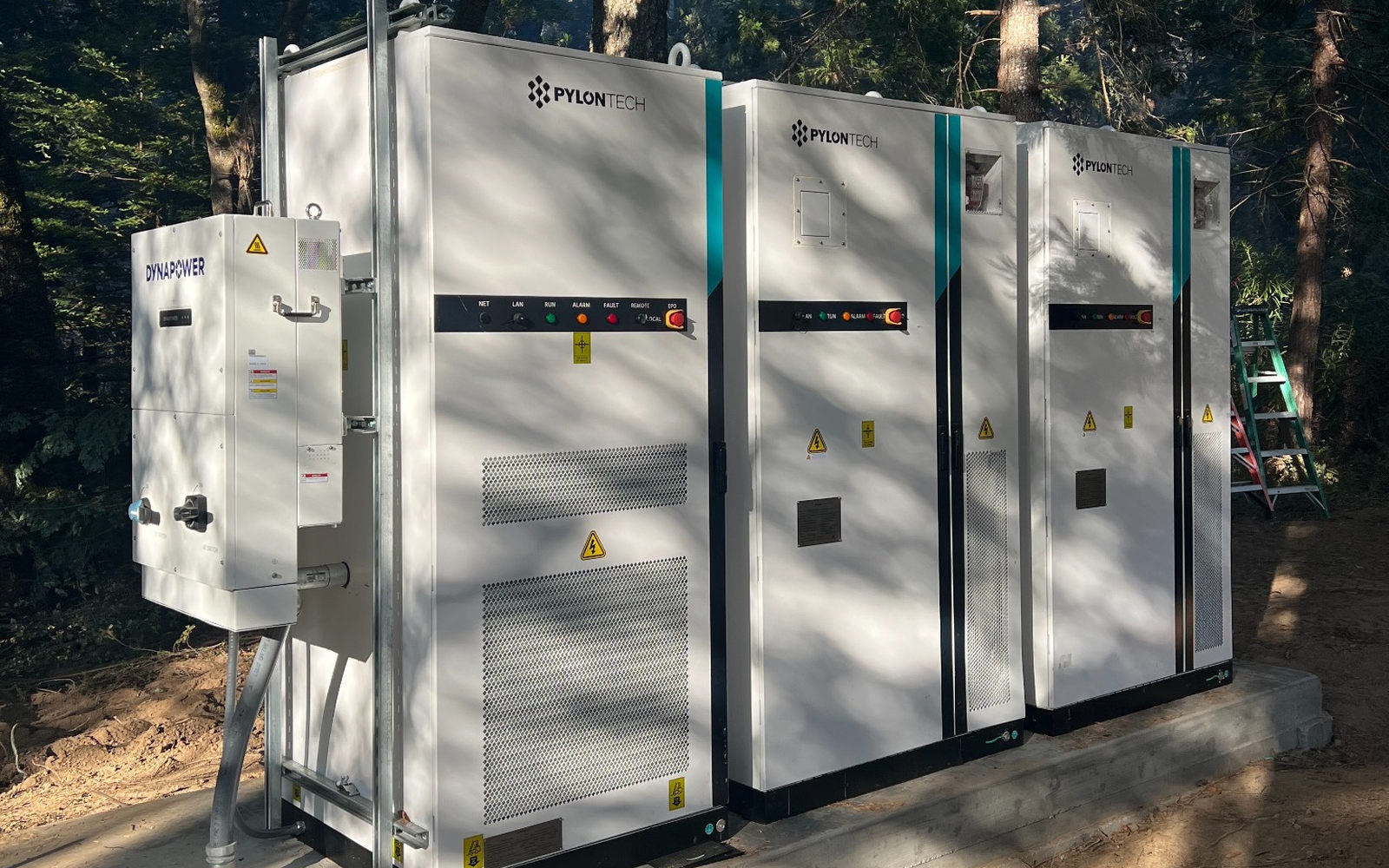
When a building owner asks, “How big should our battery be?” the answer depends on at least two different quantities: power in kilowatts (kW) and stored energy in kilowatt-hours (kWh). Both matter for commercial battery energy storage systems (BESS), especially where outage resilience is a priority.
What is kW?
A kilowatt is a unit of power: the rate at which electricity is used or supplied at a moment in time. The facility may have a substantial peak power requirement even when most equipment runs only intermittently. HVAC equipment, pumps and motors can also have starting demands that must be considered in the electrical design.
What is kWh?
A kilowatt-hour is an amount of energy. It helps describe how much electricity a battery may be able to deliver over time. For example, a constant 20 kW load uses 20 kWh in one hour. But nameplate battery capacity and usable energy are not always identical, and available energy may vary with operating limits, state of charge, temperature and system losses.
What determines battery backup duration?
As a simplified illustration, 100 kWh of usable energy serving a constant 20 kW load implies about five hours before losses and other design factors. Actual runtime is not guaranteed by that arithmetic. Conversion efficiency, reserve settings, allowable depth of discharge, discharge rate and changing facility load all affect the result.
Start with a critical-load strategy
The best starting point is often a list of essential operations: safety systems, controls, communications, refrigeration, critical HVAC, process equipment or selected outlets. Some facilities benefit from separating those loads electrically so a storage system is not asked to support the entire building. Others need more comprehensive backup capacity.
What changes if the site also has solar?
PV can contribute energy when sunlight and compatible system operation allow it. However, the presence of solar does not automatically enable islanded operation. Microgrid controls, suitable protection and safe isolation must be designed for the intended use.
Can a generator extend runtime?
A compatible generator may supply additional energy or power during extended outages, but generator integration requires coordination with battery inverters, transfer equipment, controls, protection and load management. Compatibility should be evaluated before equipment is specified.
Commercial BESS planning checklist
- Measured load profile and peak kW
- Critical circuits and motor starting requirements
- Desired outage duration and operating strategy
- Required usable kWh, reserve and battery power rating
- Existing service gear, space, access and ventilation or thermal needs
- Utility interconnection, fire safety and permitting requirements
- Solar, generator and microgrid compatibility
Frequently asked questions
Does a bigger kWh rating always mean better backup?
No. The battery and inverter must supply sufficient instantaneous power, and the electrical system must safely route that power to the intended loads.
Does a battery automatically lower demand charges?
No. Potential savings depend on utility rates, the site's load profile, dispatch strategy, usable capacity and costs.
Can the battery serve an entire commercial facility?
Possibly, but whole-facility backup and critical-load backup are different design choices with different costs and equipment requirements.
Grid Titans supports advanced electrical infrastructure and energy storage integration. Learn about Intelligent Microgrids or discuss a commercial storage project.