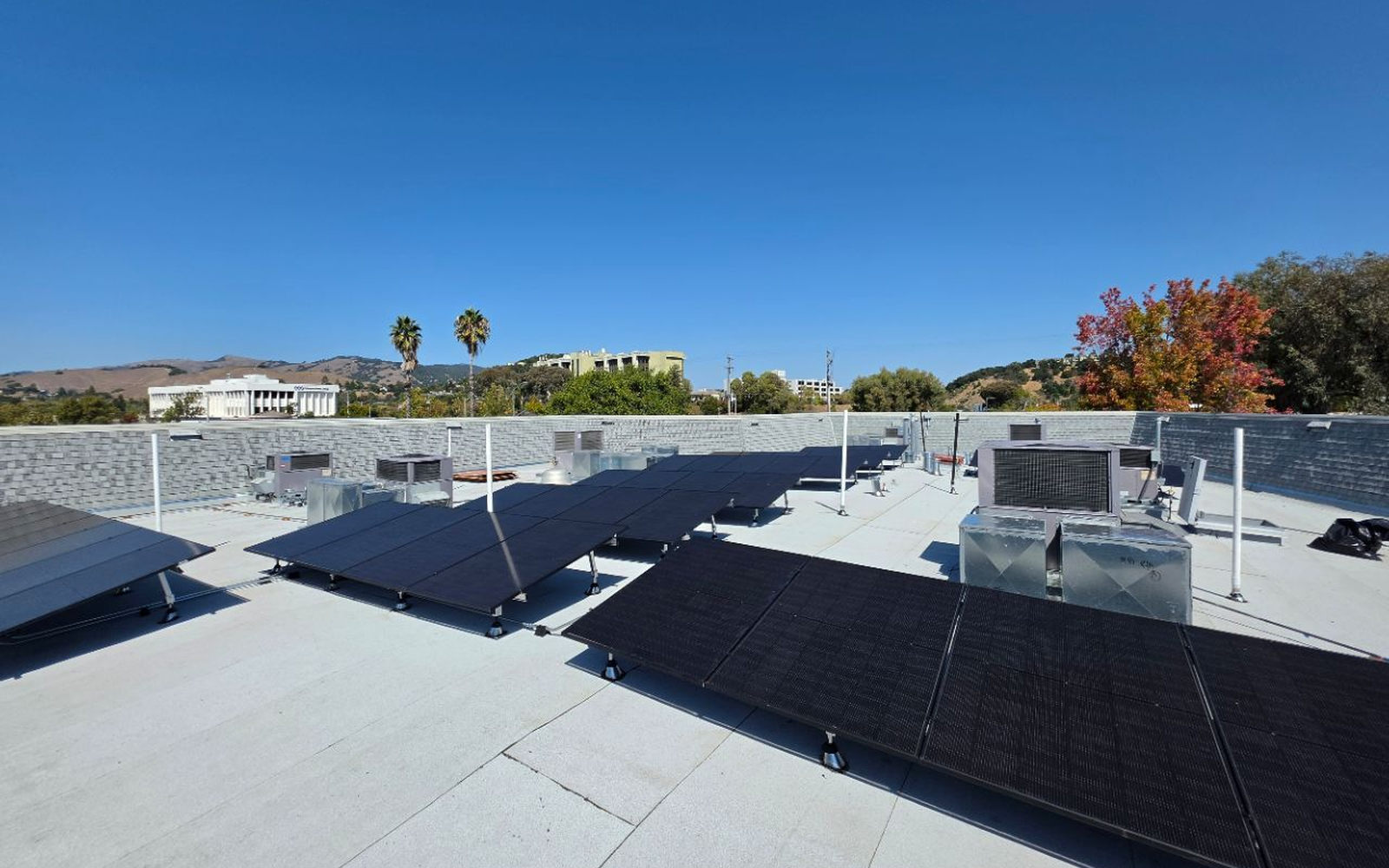
Commercial rooftop solar systems are long-lived infrastructure, but the roof or building beneath them can change. Roofing replacement, building renovations, electrical modernization or equipment failures may require an existing photovoltaic system to be decommissioned, removed and reconstructed.
Handled properly, that process protects workers, helps preserve suitable equipment and gives the facility a path back to safe, dependable solar generation.
What is solar decommissioning?
For a roof replacement, decommissioning generally includes documenting the existing array, planning safe shutdown and electrical isolation, disconnecting and removing selected PV components, protecting materials during storage, and coordinating the rebuild. The final scope may also include system redesign, replacement equipment, testing, permits, inspections and utility coordination.
Six questions to settle before the roofing work begins
- What equipment is installed? Record module, inverter, racking and monitoring details along with available as-built drawings.
- How will the array be made safe? Qualified electrical personnel should plan isolation, verification, labeling and any applicable lockout procedures.
- What is the construction sequence? Coordinate removal, roofing work, equipment storage and reconstruction with the building's operating schedule.
- What can be reused? Evaluate the condition, compatibility, age and warranty considerations of existing modules, racking and electrical equipment.
- What will change? Roof attachments, wiring pathways, service equipment and monitoring may require modifications under a new design.
- What must happen before energization? Identify the inspection, testing and commissioning activities necessary to return the system to service.
Remove and reinstall or repower?
A straightforward remove-and-reinstall may be appropriate when existing equipment remains serviceable and compatible. Repowering can be the better choice when equipment is obsolete, repairs are extensive, existing roof attachments need redesign, or the facility's electrical needs have changed. There is no universal answer. A site assessment should inform the decision.
Why the construction handoff matters
PV removal is not isolated from the rest of the project. Roofing crews need safe access and clear handoff points. The electrical team must account for exposed conductors, mounting penetrations, component storage and future testing. In an occupied commercial facility, the sequence should also consider business operations and any required outages.
A real project: Marin Builders Association
Grid Titans decommissioned and rebuilt a commercial rooftop solar installation for Marin Builders Association in San Rafael, California. The project demonstrates the practical connection between solar electrical work, building improvements and construction coordination. Detailed production or financial results have not been published for this project.
Frequently asked questions
How long does solar removal take?
It depends on array size, equipment access, roof design, electrical complexity and coordination with the roofing work. A site-specific scope is needed before committing to a schedule.
Will the existing panels work after reinstallation?
That must be assessed and confirmed through inspection and appropriate testing. Equipment damage or compatibility issues can change the scope.
Should the roofing company or solar company coordinate the project?
Both should participate in planning, with a clear division of responsibility for electrical safety, equipment handling, roof work and return-to-service activities.
If your facility needs roofing work under an existing PV array, plan the electrical scope early. Explore our Commercial Infrastructure and Repowering services or tell us about the project.