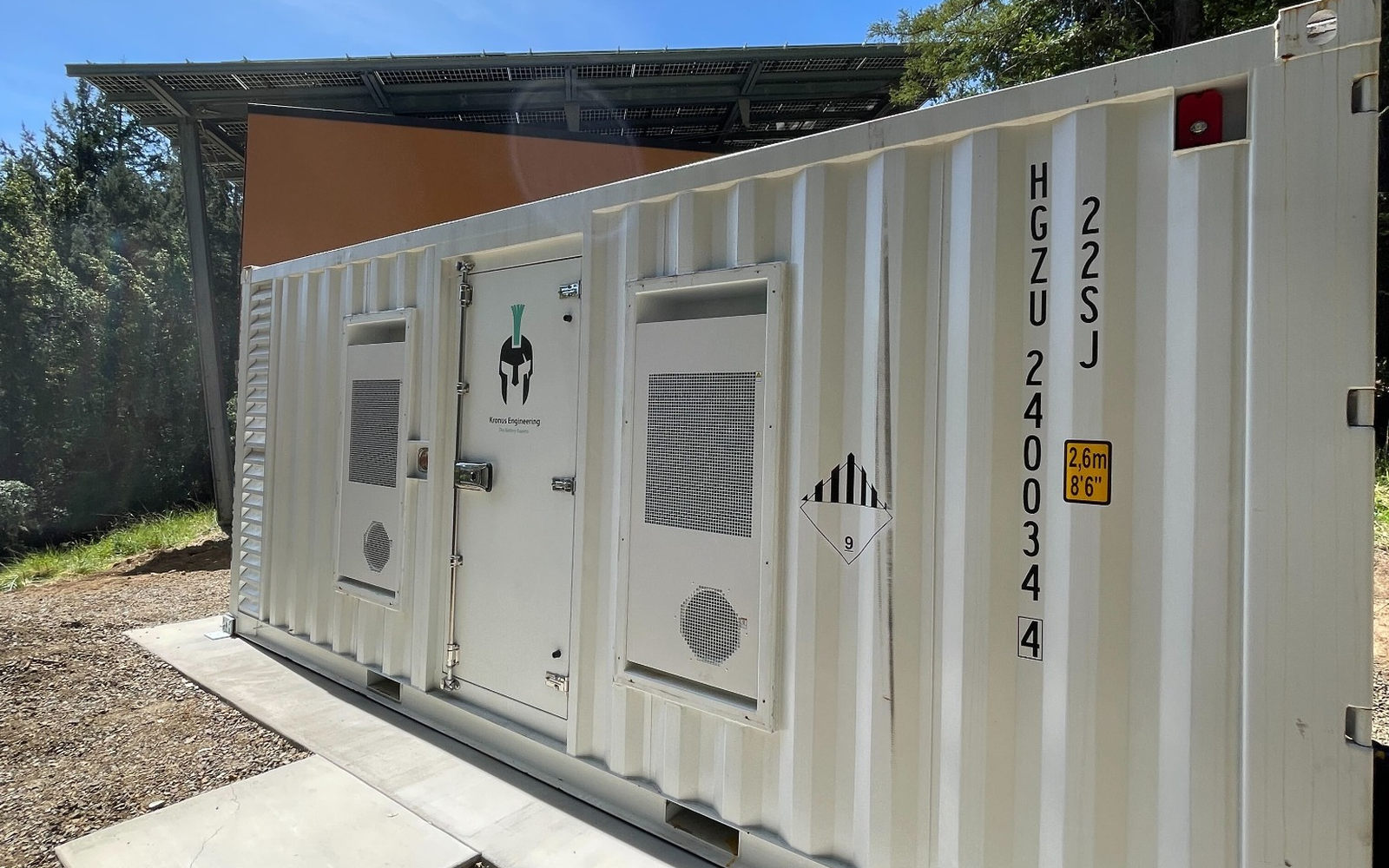
A commercial microgrid is a coordinated electrical system connecting local energy resources, facility loads, power-distribution equipment, protection and controls. It can operate while connected to the utility. If designed and permitted for islanding, it may also serve selected on-site loads during a grid outage.
What actually makes a system a microgrid?
The defining feature is coordinated operation, not any single piece of equipment. A site might combine solar photovoltaic (PV) generation, a battery energy storage system (BESS), compatible backup generators, switchgear, critical-load panels and a controller that manages available resources. The specific architecture depends on the facility's power needs and what its existing electrical infrastructure can support.
For example, a building with ordinary grid-connected solar will generally shut down its PV system when utility power fails. Batteries alone do not necessarily change that. Serving loads during an outage requires appropriate isolation, interconnection protection, operating sequences and compatible equipment.
How does islanding work?
Islanding is the intentional separation of a defined electrical system from the utility supply. A properly designed microgrid can then serve certain loads from available local resources, subject to power and energy limits. When utility service returns, a suitable control strategy manages the transition back. Details of protection, reconnection and utility approval are engineering and permitting questions not something to assume from a product brochure.
What should a facility owner evaluate first?
- Critical loads: Which operations must continue, and which can be interrupted or shed?
- Power demand: How many kilowatts are required simultaneously, including large motor starting loads?
- Outage duration: How long must those loads run without utility service?
- Existing infrastructure: What service equipment, switchgear, feeders and backup systems are already installed?
- Site conditions: What locations, clearances and electrical pathways are available for the equipment?
- Utility and permitting: What interconnection, fire-safety, protection and inspection requirements apply?
Does a microgrid reduce electricity bills?
It can, but savings cannot be presumed. Demand charges, tariff structure, site load shape, battery dispatch strategy, solar production, equipment cost and incentive eligibility all matter. Some customers prioritize outage resilience even when the financial case is driven by operational continuity rather than utility-bill savings.
How do kW and kWh affect design?
kW measures power at a given moment. kWh measures energy available or consumed over time. An appropriately sized storage system needs sufficient power to operate connected loads and sufficient usable energy for the desired duration. Both should be considered alongside generator capacity and available solar production.
Grid Titans field experience
Grid Titans' project experience includes solar, battery storage, distribution upgrades and generator integration at Northern California facilities such as Ratna Ling and Tamalpais Pediatrics. These projects illustrate why an energy system's field installation and electrical architecture matter as much as the equipment selection.
Frequently asked questions
Can we integrate existing solar or generators?
Sometimes. Equipment compatibility, controls, interconnection and the protective-device scheme must be reviewed before making that decision.
Can the entire facility be backed up?
Possibly, but many projects are designed around selected critical loads. The answer depends on peak power demand, feasible equipment capacity, outage goals and cost.
Where should a microgrid project begin?
Start with actual site loads and operational requirements, then evaluate the existing electrical infrastructure before specifying components. Explore our Intelligent Microgrids capabilities or discuss your site with Grid Titans.